

 Free gifts with orders of €150 or more



 Loading...
Why duct tape is the default roll in so many industries
Three properties explain why this roll is everywhere. It tears by hand, so you need neither knife nor scissors. It is water-resistant, so it survives outdoors and in damp spaces. And it bonds aggressively, including to rough, untreated material where most other tapes give up. That combination makes duct tape the tool you grab when you do not know in advance what you will run into. If you want to know how to choose within that range – standard or extra strong, hot-melt or solvent adhesive – read our guide to choosing duct tape. This article is about the application itself.
Events, stage and rental
In the events industry most rolls go on cables. Leads running across a walkway get taped down so nobody trips and the cable does not shift when someone knocks into it. Beyond that, duct tape is used to mark truss sections, to close covers and flight cases temporarily, and to patch damage to a sheet or marquee on location until the rental company has its material back.

per 24 Pieces  Value box of 24 rolls Strong cloth backing Tears cleanly by hand

per 1 Pieces Set of 4 colours Start coding straight away Strong, waterproof tape 
per 24 Pieces Discreet matte black Bulk pack: 24 rolls Strong hotmelt bond 
Extra wide and matte black Cover large areas quickly Value box of 12 rolls 
per 1 Pieces Extra-wide single roll Large areas in one pass Strong, waterproof tape
per 1 Pieces Extra-wide single roll Matte black, does not stand out Seal large areas quickly 
per 1 Pieces Single roll, ready to use Matte black and discreet Strong cloth backing 
per 1 Pieces Practical single roll Writable with a marker Strong, waterproof tape 
per 1 Pieces Handy single roll Versatile all-round use Waterproof cloth tape 
per 1 Pieces Single roll with solvent adhesive Writable and tidy colour Extra grip on rough work 
per 1 Pieces Single roll with solvent adhesive Matte black, barely reflects Strong grip on rough work 
per 1 Pieces Single roll, extra-strong adhesive Bonds on rough surfaces Waterproof and more weather-resistant 
per 1 Pieces Camouflage print, blends into nature Extra-strong solvent adhesive Waterproof and robust 
per 1 Pieces Solid red colour Warn and code clearly Strong, waterproof tape 
per 1 Pieces Solid yellow colour Handy for marking Strong cloth backing 
per 1 Pieces Solid green colour Ideal for coding Tears cleanly by hand 
per 1 Pieces Solid blue colour Handy for colour coding Strong, waterproof tape 
Free shipping from €75 Both business and private Free gifts when you spend €150 
per 1 Pieces Striking neon blue Ideal for colour coding Strong cloth tape
per 24 Pieces Bulk pack of 24 rolls Fresh, clean white colour Strong and hand-tearable 
per 1 Pieces Bright orange signal colour Warn clearly Strong, waterproof tape 
per 1 Pieces Striking neon pink Fun for decoration and events Strong cloth backing 
per 1 Pieces Striking neon green Handy for colour coding Strong, waterproof tape 
per 1 Pieces Bright neon signal colour Ideal for warning Strong cloth tape
per 12 Pieces Extra wide: 96 mm Seal large areas faster Value box of 12 rolls


Why you do not use duct tape on a stage floor
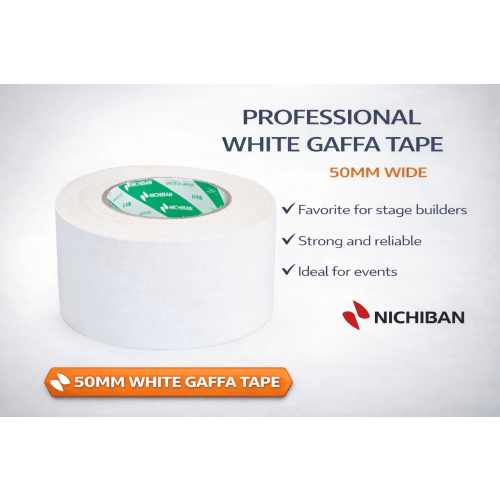
This is where it goes wrong most often. Duct tape has a glossy top layer that flares under spotlights and on camera, and an adhesive that anchors itself into the surface. On a lacquered stage floor, a parquet floor in a rented venue or a painted wall, that means adhesive residue and sometimes damage – and therefore an invoice afterwards. Use Nichiban® gaffer tape there: matt finish, no reflection, and tuned for clean removal. Keep duct tape for the outdoor area, the truck and the material that is already battered.

per 1 Pieces Leaves no adhesive residue Strong cloth backing (NT1200) Inconspicuous on set and stage 
per 1 Pieces Leaves no adhesive residue Strong cloth backing (NT1200) Writable for marking and labelling 
per 1 Pieces Leaves no adhesive residue Strong cloth backing (NT1200) Eye-catching colour for sets 
per 1 Pieces Leaves no adhesive residue Strong cloth backing (NT1200) Ideal for colour coding 
per 1 Pieces Leaves no adhesive residue Strong cloth backing (NT1200) Bold signal colour 
per 1 Pieces Leaves no adhesive residue Strong cloth backing (NT1200) Blends into nature, waterproof 
per 1 Pieces Leaves no adhesive residue Strong cloth backing (NT1200) Ideal for colour coding 
per 1 Pieces Leaves no adhesive residue Strong cloth backing (NT1200) Neutral, inconspicuous colour 
per 1 Pieces Leaves no adhesive residue Strong cloth backing (NT1200) Neutral, inconspicuous colour 
per 1 Pieces Leaves no adhesive residue Strong cloth backing (NT1200) Inconspicuous on set and stage 
per 1 Pieces Leaves no adhesive residue Strong cloth backing (NT1200) Neutral, inconspicuous colour 
per 1 Pieces Leaves no adhesive residue Strong cloth backing (NT1200) Bold signal colour 
per 1 Pieces Leaves no adhesive residue Strong cloth backing (NT1200) Ideal for colour coding 
per 1 Pieces Leaves no adhesive residue Strong cloth backing (NT1200) Writable for marking and labelling 
per 1 Pieces Leaves no adhesive residue Strong cloth backing (NT1200) Writable for marking and labelling 
per 1 Pieces Leaves no adhesive residue Strong cloth backing (NT1200) Ideal for colour coding 
per 1 Pieces Leaves no adhesive residue Strong cloth backing (NT1200) Ideal for colour coding 
per 1 Pieces Leaves no adhesive residue Strong cloth backing (NT1200) Inconspicuous on set and stage 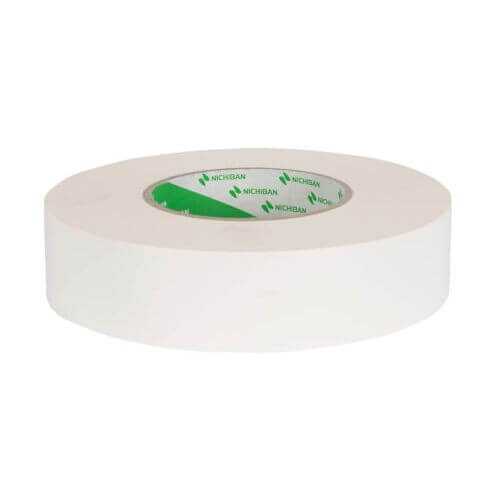
per 1 Pieces Leaves no adhesive residue Strong cloth backing (NT1200) Writable for marking and labelling 
per 1 Pieces Leaves no adhesive residue Strong cloth backing (NT1200) Neutral, inconspicuous colour 
per 1 Pieces Leaves no adhesive residue Strong cloth backing (NT1200) Bold signal colour 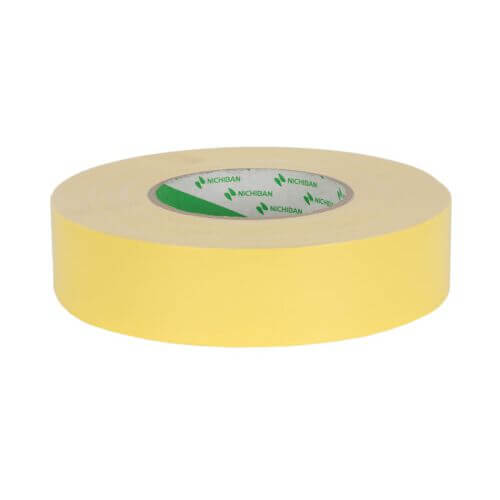
per 1 Pieces Leaves no adhesive residue Strong cloth backing (NT1200) Writable for marking and labelling 
per 1 Pieces Leaves no adhesive residue Strong cloth backing (NT1200) Inconspicuous on set and stage 
per 1 Pieces Leaves no adhesive residue Strong cloth backing (NT1200) Neutral, inconspicuous colour 
per 1 Pieces Leaves no adhesive residue Strong cloth backing (NT1200) Ideal for colour coding 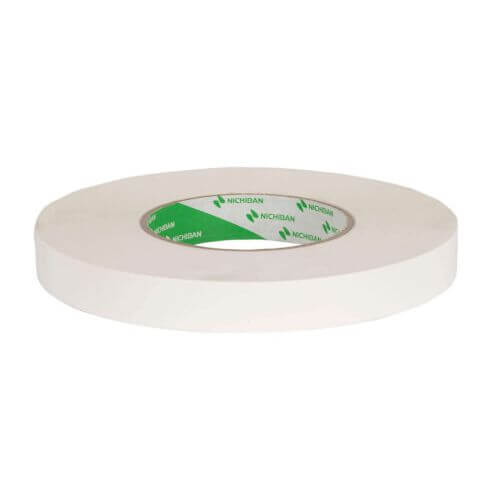
per 1 Pieces Leaves no adhesive residue Strong cloth backing (NT1200) Writable for marking and labelling 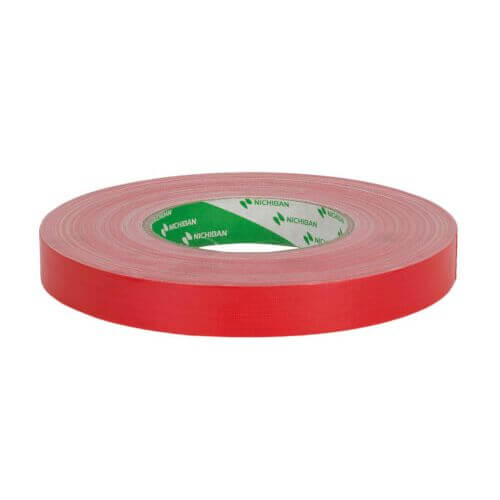
per 1 Pieces Leaves no adhesive residue Strong cloth backing (NT1200) Bold signal colour 
per 1 Pieces Leaves no adhesive residue Strong cloth backing (NT1200) Ideal for colour coding 
per 1 Pieces Leaves no adhesive residue Strong cloth backing (NT1200) Writable for marking and labelling 
per 1 Pieces Leaves no adhesive residue Strong cloth backing (NT1200) Inconspicuous on set and stage 
per 1 Pieces Leaves no adhesive residue Strong cloth backing (NT1200) Writable for marking and labelling 
per 1 Pieces Leaves no adhesive residue Strong cloth backing (NT1200) Neutral, inconspicuous colour 
per 1 Pieces Leaves no adhesive residue Strong cloth backing (NT1200) Inconspicuous on set and stage



Which colour works best on location?
Black for anything that should stay invisible, fluorescent shades for anything that must be seen, and white or silver where someone will write on it with a marker. To cordon off a zone, barrier tape is quicker to deploy than a strip of tape, and for recurring walkways in a hall floor marking tape lasts considerably longer.

per 1 Pieces Clear deposition No glue residues Durable PVC 
per 1 Pieces Clear deposition Packed per roll Durable PVC 
per 1 Pieces Extra tensile strength Handy dispenser box 500mtr per roll 
per 1 Pieces 35my thick Handy dispenser box Clear marking 
per 1 Pieces Red colour No glue residue Versatile use 
per 1 Pieces 50mm x 33mtr Clear demarcation Packed per roll 
per 1 Pieces Green colour 50mm x 33mtr Durable PVC 
per 1 Pieces Versatile use Packed per roll Clear demarcation 
per 1 Pieces Durable PVC Adhesive-free Black colour 
per 1 Pieces 50mm x 33mtr White colour Versatile usage


Construction, fit-out and installation
On site, duct tape is mainly a sealing and fixing material. Sheets of construction film are joined to each other and to the frame with it, penetrations and openings are closed off temporarily against dust and draught, and protective films are fixed down so they do not curl up underfoot. The 96 mm width is popular here: it covers a seam in a single pass, without overlaps for moisture to creep between.
Where a specialised construction tape is the better call
Around electrics and hot installations the rule of thumb runs out. For insulating, bundling and colour-coding wiring, use insulation tape: flexible PVC that follows the bend and insulates electrically. For air ducts, hot pipes and anything carrying temperature, use aluminium tape, which tolerates heat and is vapour-tight. Duct tape softens above roughly seventy degrees and then lets go – precisely where you can no longer reach it.

per 1 Pieces Fast sealing Packed per roll Various applications 
per 1 Pieces 100mm wide Up to 120°C Airtight seal 
per 8 Pieces Black colour 19mm wide Heat-resistant 
per 3 Pieces 15my thick Water-resistant Flexible


How long does duct tape stay put on scaffolding?
Outdoors, duct tape is a temporary solution, not a final one. Rain, freeze-thaw cycles and above all UV radiation break down the top layer over a matter of months. For outdoor work always choose a black, extra strong grade with solvent adhesive, and count on weeks to a few months rather than seasons. If something genuinely has to hold, that calls for heavy duty cable ties or a proper mechanical fastening.
Transport, dispatch and warehousing
In dispatch, duct tape is the repair roll. A carton torn during loading, a pallet with a damaged corner, an outer box that turns out to be overloaded: one strip of duct tape and the shipment goes out anyway. Marking pallets, fixing a lid onto a crate and temporarily securing a flap all happen with it too.
Why duct tape is not packing tape
For routine carton sealing, duct tape is the wrong choice: stronger than cardboard needs, more expensive per metre, impossible to apply with a dispenser in one movement, and harder to separate for recycling. Use PP packing tape or PVC packing tape for that, and paper tape for a paper-only packaging stream. If a shipment needs a visible seal, warning tape is the right roll. And for heavy bundles, take filament tape or lashing straps, because tape holds things together but does not carry them.
Film, photography and studio
In studios, duct tape is used for everything that stays out of shot: cable runs behind the set, marking stands and cases, fixing curtains and blackout film. Anything that does appear on camera, or sits on a delicate surface, goes down with gaffer tape. Here too the matt finish is decisive: a glossy strip of duct tape lights up immediately in a shot.
Removals, storage and property management
On removals, duct tape keeps drawers shut, bundles loose parts with the furniture they belong to, and secures tarpaulins and corners. In storage it is used to close off covered goods against dust and to mark bays and boxes.
Can I use duct tape on a painted wall or door?
Preferably not. The rubber adhesive keeps flowing into the surface over days and weeks; on removal, old paintwork, wallpaper or a lacquered layer comes with it. For anything that has to come off cleanly, use painter's tape or masking tape. If you need to open and close something repeatedly, hook and loop on a roll or a releasable cable tie is the better answer.
Agriculture, groundcare and outdoor maintenance
In agriculture and groundcare, duct tape is used for emergency repairs to sheeting, netting, silage film, hoses and machine parts, and to mark tools and handles. It is the sector that treats the roll hardest: outdoors, dirty, cold and often on rough material. Choose the extra strong grade with solvent adhesive as standard here, and expect adhesion to drop in frost – warm the surface up, or press the strip down firmly again after an hour.
Why does tape let go so quickly in winter?
Below freezing, the adhesive is too stiff to settle into the microstructure of the surface. It sits as a film on top rather than in it, and the first pull takes it off. On a cold, damp or powdery surface – concrete, bare timber, a frozen sheet – that effect is strongest.
Which grade suits which industry?
The table below summarises what each sector asks for most.
| Industry | Typical job | Recommended grade | Watch out for |
|---|---|---|---|
| Events and rental | Taping cables, marking cases, patching sheeting | 50 mm x 50 m, black or fluorescent | Use gaffer tape on floors and lacquered parts |
| Construction and fit-out | Closing construction film and seams, fixing film | 96 mm, extra strong | Choose black outdoors; treat as temporary |
| Installation and electrical | Bundling, temporary fixing, marking | 50 mm x 25 m, service roll | Insulate with insulation tape, not duct tape |
| Transport and dispatch | Repairing damaged cartons and pallets | 50 mm x 50 m, standard | Seal cartons with packing tape |
| Film, photo and studio | Fixing cables and set out of shot | 50 mm, matt where possible | On camera and on delicate surfaces: gaffer tape |
| Removals and storage | Holding drawers shut, bundling blankets and parts | 50 mm x 50 m, standard | Not on painted or lacquered surfaces |
| Agriculture and groundcare | Emergency repair to sheeting, netting, hose, machinery | 50 mm or 96 mm, extra strong, black | Adhesion drops in frost and on dirt |
Duck tape, duct-tape or duct tape: what are you actually searching for?
In quotations, work orders and search queries we come across four spellings, and they all refer to the same product. Duct tape as two words is the standard spelling and the form you will find in our range. Duct-tape with a hyphen turns up regularly in running text and reads just as clearly. Duck tape is at least as common in daily use – there is also a brand in the United States by that name, which has helped the spelling stick. Duk tape shows up mainly in quickly typed searches.
In practice it makes no difference: order from us under any of these terms and you end up at the same rolls. What matters more than the spelling is the grade you choose – which is exactly what our guide to choosing duct tape covers: scrim, adhesive, width and colour, with a selection table per application.
In short
- Indoors, short-term and on delicate surfaces: not duct tape but gaffer tape, painter's tape or masking tape.
- Outdoors and long-term: extra strong, black, solvent adhesive – and treat it as temporary.
- Daily packing: packing tape; keep duct tape for repairs and exceptions.
- Absorbing or carrying load: filament tape, strapping, cable ties or a mechanical fixing.
- Width: 50 mm for bundling, marking and repairs; 96 mm to cover a seam in a single pass.
Ordering duct tape from Kortpack
Our full tape range is available from stock, from a single roll to a full box. Ordered on working days before 3:30 PM? Then your order will be shipped the same day. Enjoy free delivery on orders over €75 excl. VAT.
Do you have questions about which size of duct tape is best suited to your situation? Please don't hesitate to contact us — by phone on +31 184 – 614256, via info@kortpack.nl or via WhatsApp.
 Den Webshop auf Deutsch ansehen
 View the webshop in English
 Ver la tienda online en Español
 Voir la boutique en ligne en Français
 Visualizza il negozio online in Italiano
 Bekijk de webshop in het Nederlands